About The Book
About The Book
Rogziel
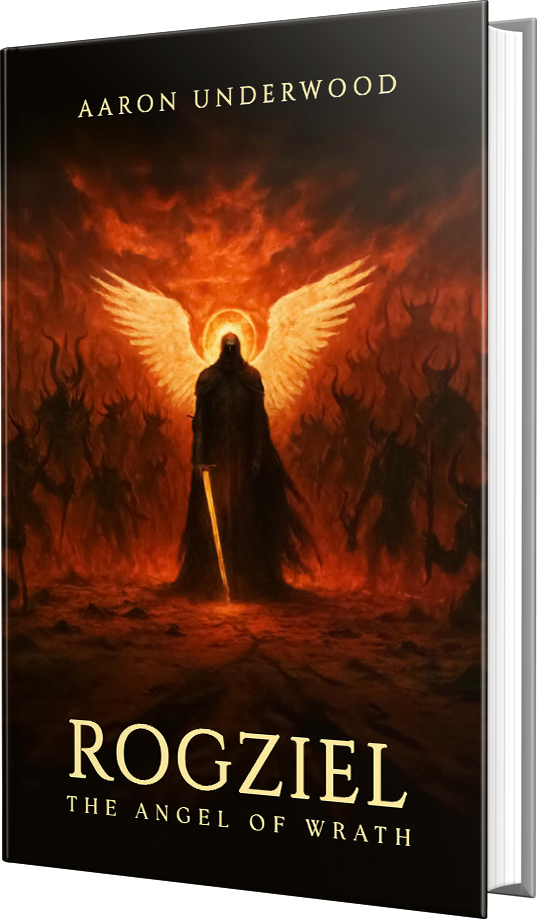
‘Rogziel’ opens in a war-torn desert between Heaven and Hell where battles rage endlessly, and the sand remembers nothing. Rogziel is an angel who cannot fly, earthbound and wielding Incandescent, a flaming sword. He is powerful and relentless, but deeply haunted. In his mortal life, he was Raziel, a clever thief who lived only for himself. His selfishness led to a man’s death, a desperate father begging for help for his sick daughter. Raziel felt nothing but cold logic and ran. He died alone, betrayed by another thief.
Divine judgment saw him clearly. He was unworthy. But instead of being destroyed, his skills were reforged. He became Rogziel, God’s wrath, meant for endless war. His inability to fly reminds him constantly that he is flawed. During a major battle, a demon champion mocks his lack of wings, calling him unfit. Rogziel nearly dies but is saved when Archangel Michael appears, stopping the fight and summoning him for a critical mission.
The war is changing. Apollyon, a demon commander, has developed dangerous new strategies threatening creation itself. Michael assembles a team and chooses Rogziel not because he is perfect but because he understands darkness. The team includes Sandra, a Seraphim who teaches deeper wisdom, Sarathiel for tactics, Kaelus, who creates protective barriers, Serel, whose voice disrupts demonic magic, and Irael, a healer.
Their mission is to stop a ritual summoning Abbadon, the Destroyer, an ancient being of pure destruction. Despite their efforts, the ritual succeeds. Abbadon kills everything in its path. The team fights, wounds the creature, and forces it underground, but Irael and Sarathiel are killed. Then comes a new threat: the Mirror Demon, a perfect copy of Rogziel but without doubt, empathy, or hesitation. It trounces Rogziel, humiliates him, and leaves him alive only to inflict maximum psychological damage, telling him he will always be unfit and that redemption is a lie.
Why Read It?
Rogziel
‘Rogziel’ works for readers who want action that carries emotional weight. The battles are visceral, and the stakes are cosmic, but what drives the story is Rogziel’s internal struggle with unworthiness. He is not a traditional hero who discovers hidden nobility. He was genuinely selfish and caused real harm. His transformation into an angel did not erase that past or make him whole. It gave him purpose but not peace. This complexity makes him more interesting than heroes who are simply good fighting enemies who are simply evil.
The book explores redemption honestly. Rogziel does not earn forgiveness through a single heroic act. He fights endlessly, loses people, makes mistakes, and still feels fundamentally flawed. The Mirror Demon personifies his deepest fear: that he has not really changed, that his efforts are meaningless, that his past will always define him. This confrontation forces the question of whether fundamental transformation is possible or if we are forever trapped by what we were.
For readers interested in theological themes, the book presents a nuanced view of divine justice and grace. Rogziel was judged unworthy, transformed, and given endless work rather than rest. His service is both punishment and opportunity. The question becomes whether this constitutes mercy or cruelty, and whether redemption requires forgiveness from others or acceptance of self.